To send a Three Kings’ Day card from your iPhone, you have two built-in options and one card option. In Messages, write your greeting and add a full-screen effect, or schedule it with Send Later so it arrives on the morning of Wednesday 6 January 2027 (Apple allows scheduling up to 14 days ahead, so the window opens on 23 December). For a card that opens like paper, the pop-up card app Cardigami gets a Three Kings card on 1 January, with three crowns rising under the star as the card opens.
This guide covers iOS 26 and iOS 27. Every built-in step comes from Apple’s support pages, linked where it is used. Why we wrote it: we make Cardigami, and after our Christmas and New Year guides, the Día de Reyes on 6 January is the next date when families in Spain, Latin America and many other places send greetings.
Way 1: a Three Kings’ Day message with a full-screen effect
Messages can play an effect across the whole screen when your greeting arrives. Apple’s steps, from Use message effects with iMessage on your iPhone and iPad:
- Open Messages and start a new message or open the conversation.
- Type your greeting, for example “¡Feliz Día de Reyes!”.
- Touch and hold the Send button, then tap Screen.
- Swipe left to see the full-screen effects and stop on the one you want.
- Tap the Send button.
For a quieter greeting, touch and hold the Send button and tap the grey dot next to a bubble effect to preview it instead. They can watch the effect again with the Replay button under the message. Apple notes two limits on the same page: message effects need iMessage, and if someone cannot see effects, their Reduce Motion setting is the first thing to check.
Way 2: a handwritten greeting from the family
A note in your own handwriting is the closest thing to the paper card a grandparent would send. Apple’s steps, from the same support page, under sending a doodle or handwritten message:
- In the conversation, tap the More button (+).
- Tap Drawing.
- Write your greeting or draw a crown with your finger.
- Tap Done, then tap Send.
Messages plays it back on their phone as if it is being written in front of them, which children tend to like.
Way 3: schedule it for the morning of 6 January
The kings arrive during the night of 5 January, and in many homes the presents are opened first thing on the 6th. A greeting that is already there when the family wakes up fits that better than one sent late. Apple’s steps, from Schedule a text message on iPhone to send later:
- Open the conversation in Messages.
- Tap the Add button (+), then tap Send Later.
- Tap the time and choose 6 January and the hour you want.
- Type your message, then tap the Send button.
The text field gets a dashed border so you can see the message is scheduled. To change the words, touch and hold the scheduled bubble and tap Edit; to cancel it, touch and hold and tap Delete. Scheduling works with iMessage, and you need to be online to edit or delete a scheduled message. Because of the 14-day limit, the earliest day you can schedule a greeting for 6 January is 23 December.
Way 4: a pop-up Three Kings card that opens on screen
The first three ways are text with decoration. If you want the card itself, with a fold and a scene that stands up as it opens, that is what we built Cardigami for. It is an iPhone app for any iPhone on iOS 27.1 or later, including iPhone Duo. Nine pop-up cards are in the app today, and six more arrive through the winter, each on its day. Three Kings is one of them: it arrives in the app on 1 January, and its scene is three crowns rising under the star.
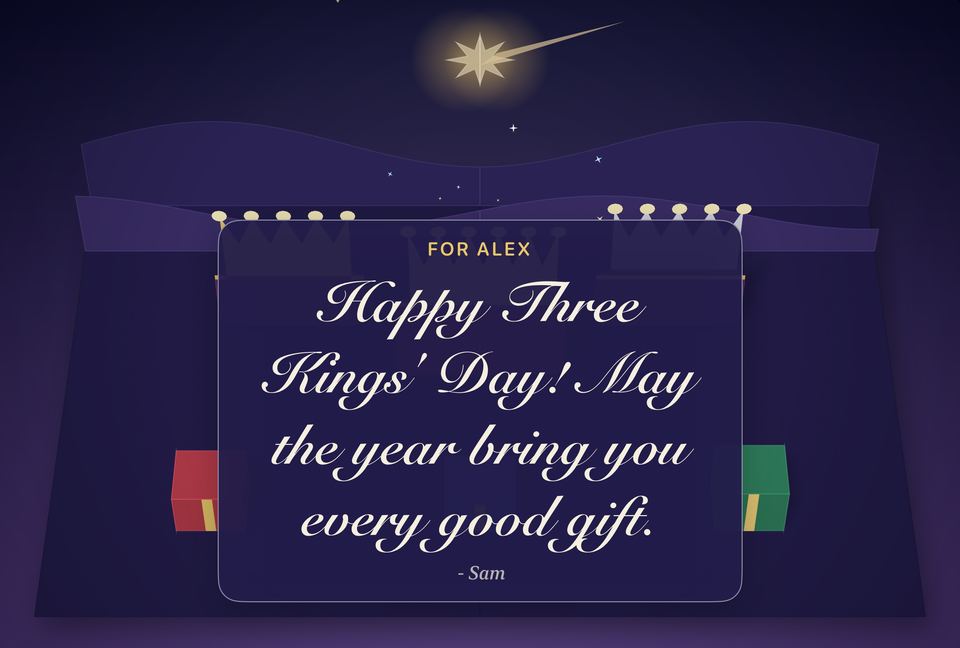
The Three Kings card, which arrives in Cardigami on 1 January.
Until 1 January the card sits under “Coming soon” in the app, with a “Remind me” button. Tap it and your phone shows a notification on the day the card arrives, which leaves you five days to write it before the 6th.
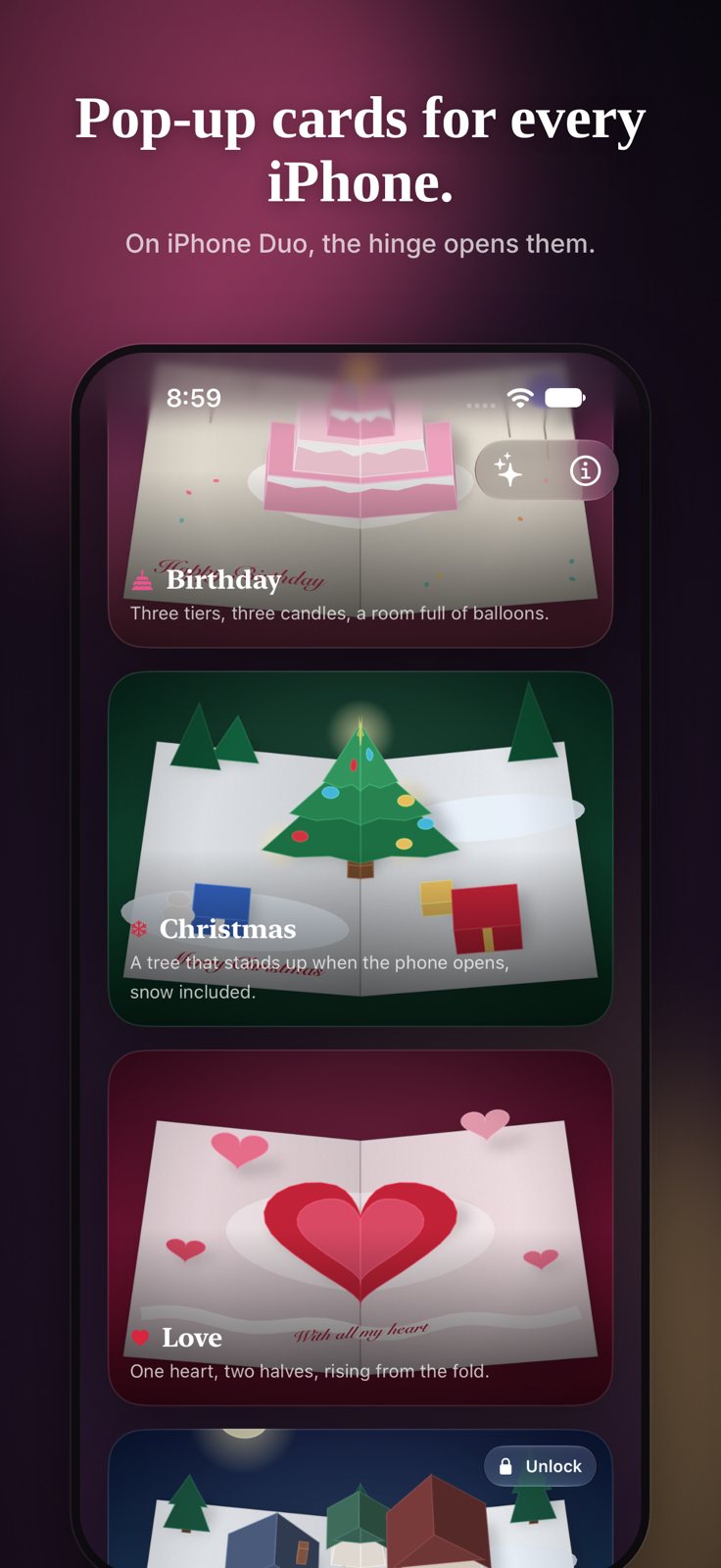
The card picker in Cardigami on iPhone.
How to make the card:
- Before 1 January: open Cardigami, find Three Kings under “Coming soon” and tap “Remind me”.
- From 1 January: open the Three Kings card and write a “to”, a “from” and your message.
- Drag the slider in the editor to preview the fold.
- Give it one of three ways: hand the closed phone over, tap “Share link” (the link opens in Cardigami, or plays in their browser if they do not have the app), or tap “Save video” and send the video in Messages, WhatsApp or any other app.
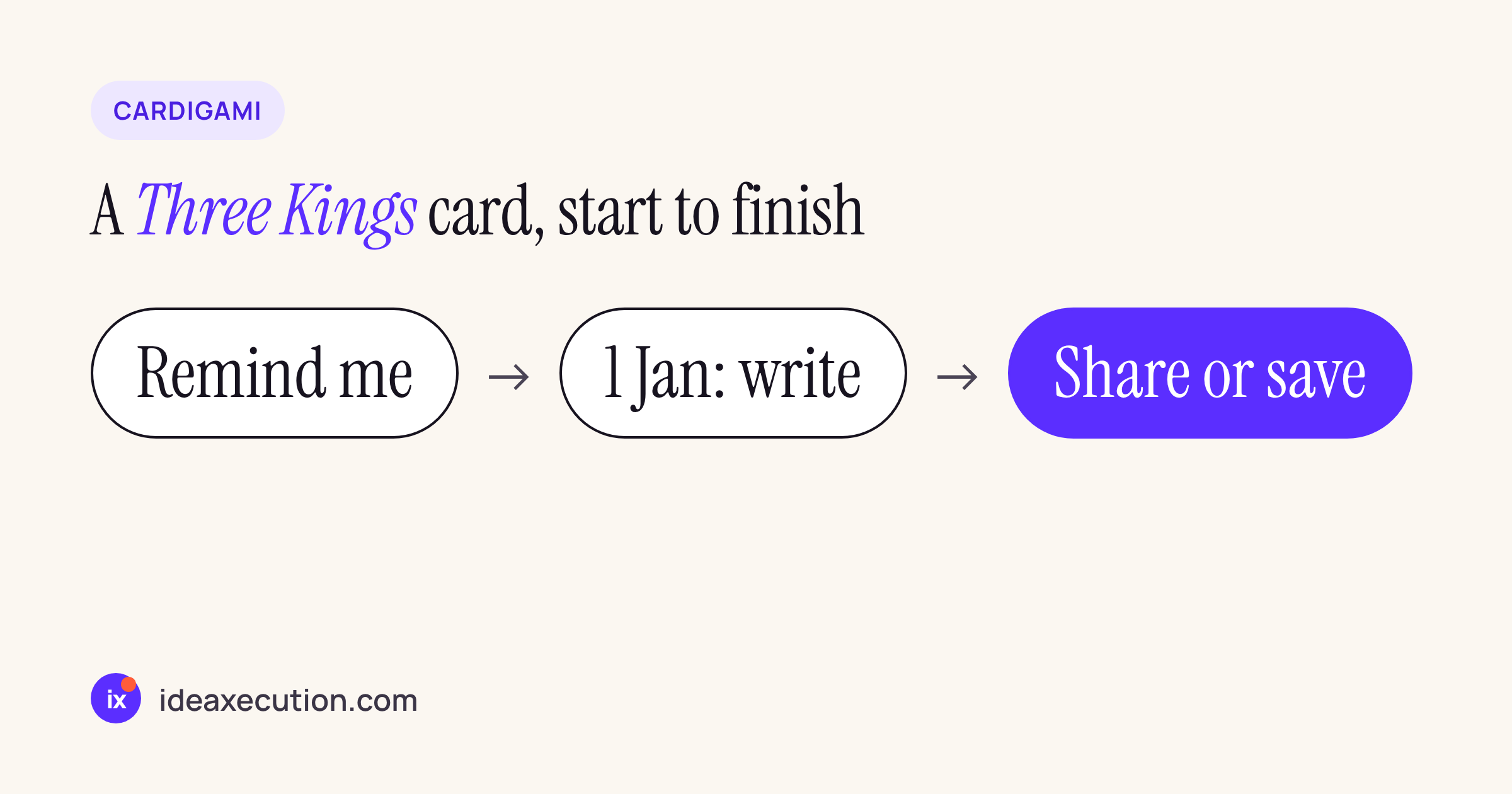
The whole flow, from the reminder to a card you can share.
Three Kings is part of the one purchase that unlocks every card in the app, including the six arriving this winter, with no subscription. Birthday, Christmas and Love are the three free cards, so you can try how a pop-up card feels before then.
On iPhone Duo, the hinge opens the card
On other iPhones, the person drags the card open. On iPhone Duo the card follows the hinge: hand someone the closed phone, and as they unfold it the scene rises from the fold with your message inside. At a family breakfast on the 6th, that is the closest a phone gets to passing a paper card across the table.
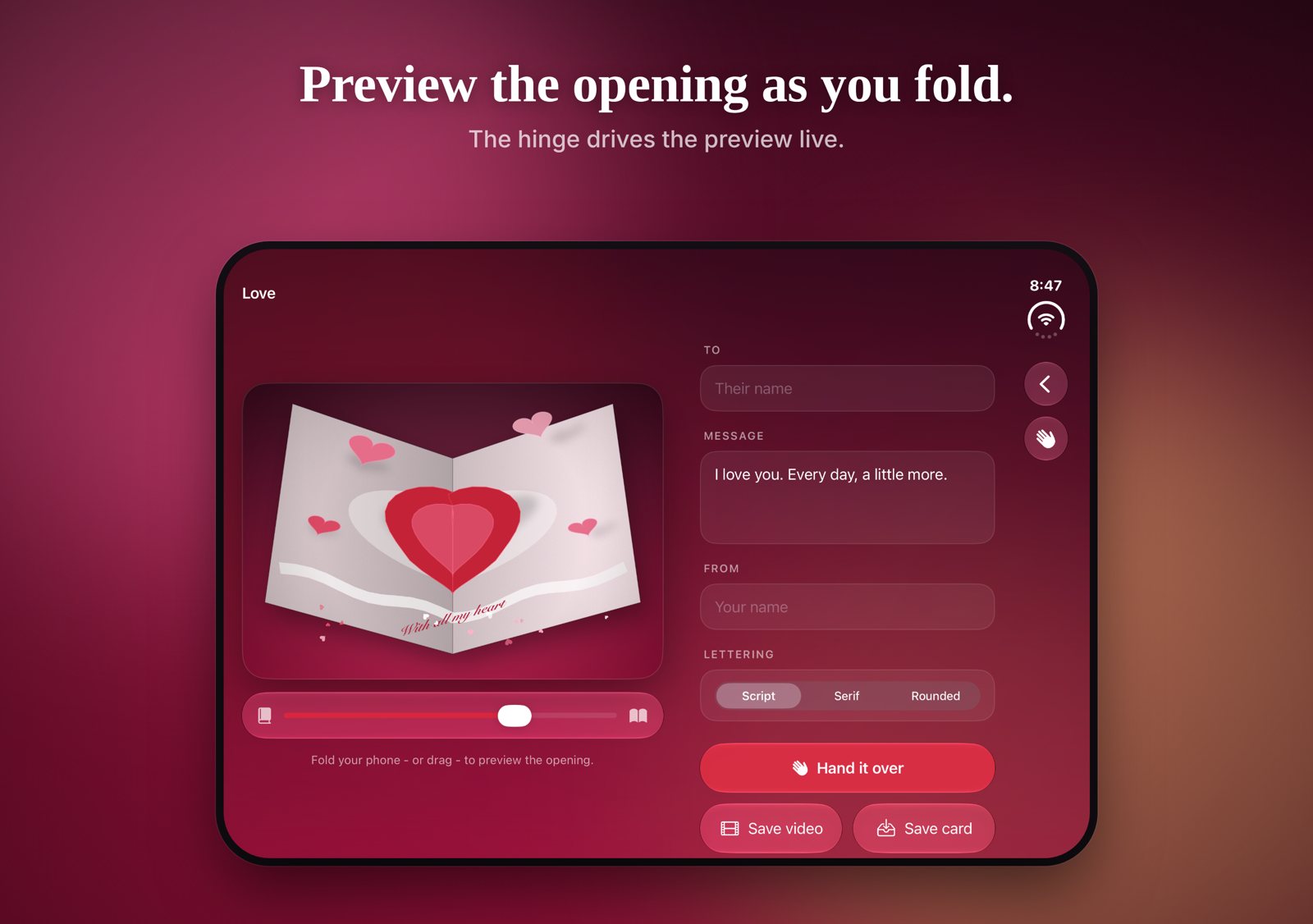
Previewing the fold in Cardigami on iPhone Duo.
For family far away: send a link or a video
If you are not together on the day, “Share link” sends the card itself: it opens in Cardigami if they have it, or plays in the browser if they do not, so nobody has to install anything. “Save video” makes a vertical video of the card opening that plays on any phone, Android included. A good pairing for grandparents abroad: schedule a short message for the morning with Way 3 and send the card link with it.
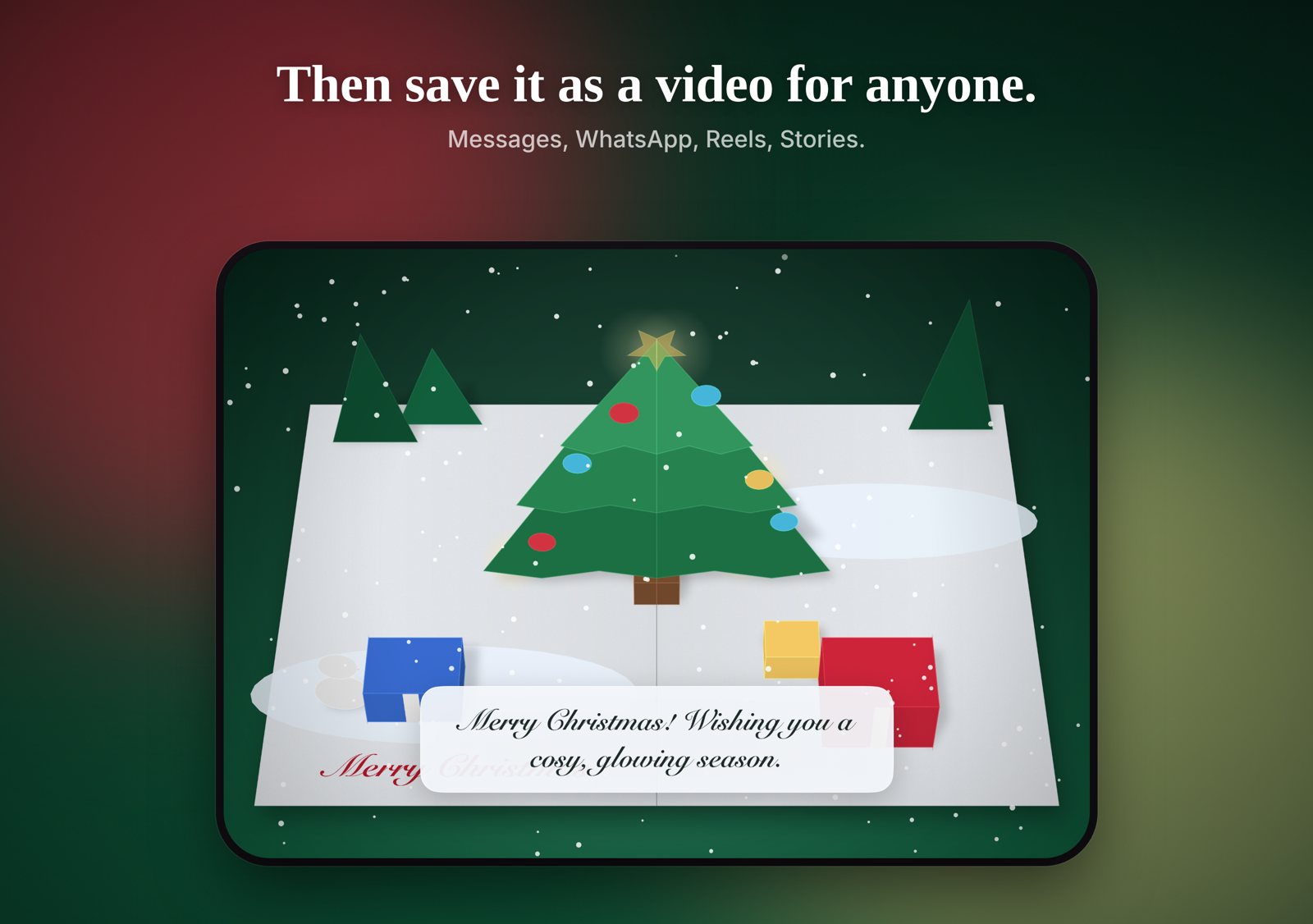
Saving a card as a video to send in any messaging app.
Cardigami has no account, no ads and no tracking, and the app collects no data. A card leaves your phone only when you share it, as a link or a video, and a link carries only the card and its words.
Which way to pick
- Something quick with a bit of drama: Way 1, a full-screen effect (needs iMessage).
- Your own handwriting: Way 2, a drawing in Messages (needs iMessage).
- Arriving on the morning of 6 January: Way 3, Send Later (iMessage, up to 14 days ahead, so from 23 December).
- A card that opens like paper: Way 4, Cardigami’s Three Kings card (iOS 27.1 on your iPhone, from 1 January).
- Someone on Android or WhatsApp: Way 4 as a link or a saved video.
Common questions
When is Three Kings’ Day in 2027?
Three Kings’ Day (Día de Reyes, the Epiphany) is on Wednesday 6 January 2027. The kings are said to arrive during the night of 5 January, which is why greetings and presents usually come on the morning of the 6th.
Can I send a Three Kings’ Day card from iPhone to an Android phone?
Message effects, handwritten messages and Send Later rely on iMessage, so they do not reach Android phones the same way. A Cardigami link plays in their browser, and a saved video plays in WhatsApp or any other messaging app.
When does the Three Kings card arrive in Cardigami?
On 1 January. Until then it shows under “Coming soon”; tap “Remind me” to get a notification on the day.
Does the person receiving the card need Cardigami?
No. A shared link plays in their browser if they do not have the app, and a video plays anywhere.